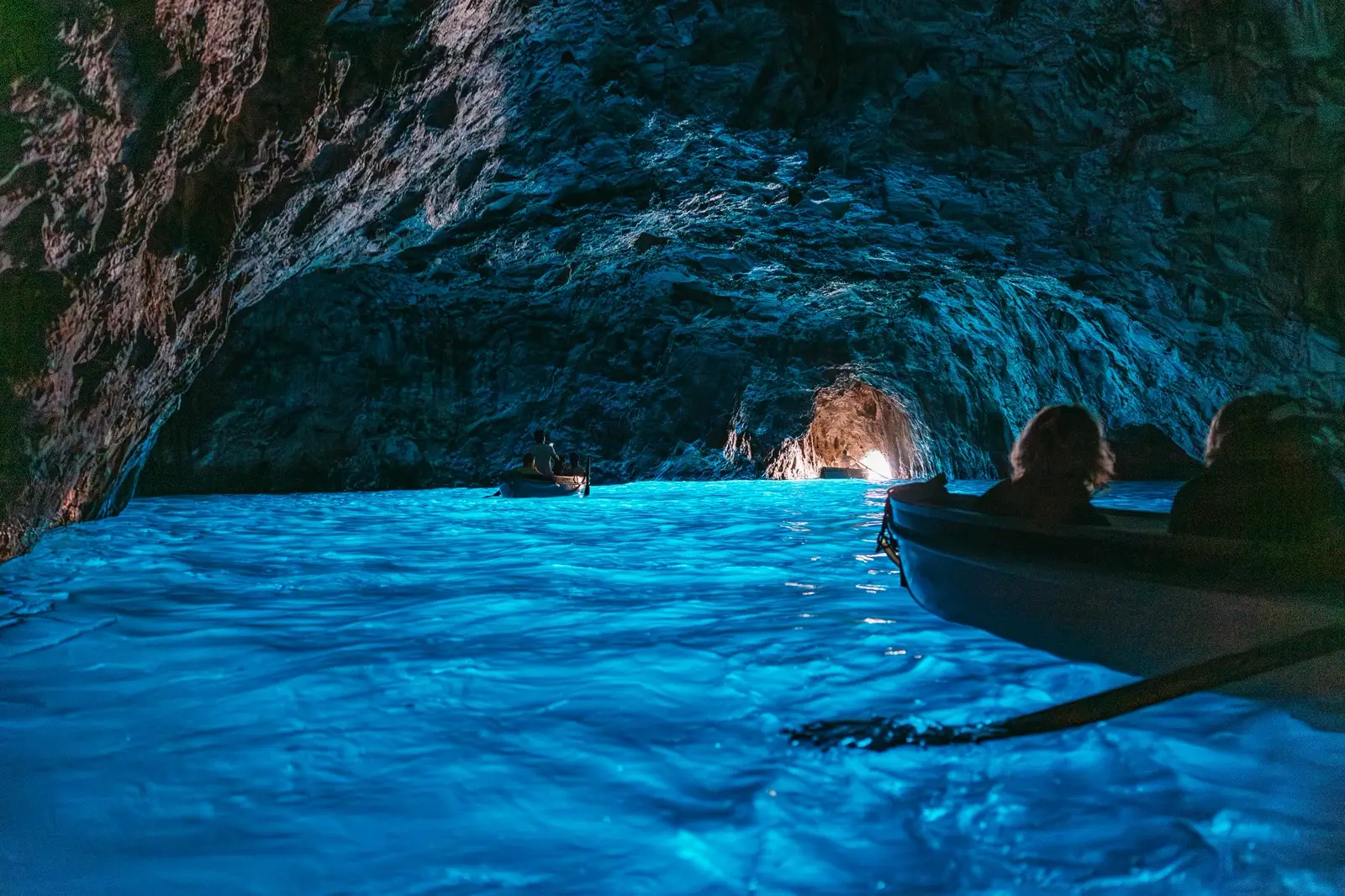
The electric-blue glow inside Capri's Blue Grotto with a rowboat silhouette at the cave mouth
Grotta Azzurra · Capri · 2026 guide

Blue Grotto Capri: Tickets, Prices, Hours & How to Visit

Everything you need to plan a visit in 2026 — the €18 entrance fee, opening hours, every route from Sorrento and Capri, the best time to go, and an honest take on whether it's worth it.

The Blue Grotto (Grotta Azzurra) is Capri's most famous natural attraction — a sea cave where sunlight passing through an underwater opening turns the water an electric, luminous blue. Visiting it involves a mandatory rowboat transfer, an entrance fee paid on-site and, in peak season, a fair amount of patience.

Popular Sorrento day trip to Capri with a Blue Grotto stop
Pоwered by GetYourGuide

This guide covers current ticket prices, opening hours, every way to get there (from Capri, Sorrento, Naples and the Amalfi Coast), how the visit actually works, the best time to go, whether you can swim, what to do if it's closed, and whether it's worth it. Most Sorrento day-trippers see the grotto as part of a wider Capri boat tour — so we've flagged where a tour makes sense and where going independently is simpler.

What Is the Blue Grotto?

The Blue Grotto is a sea cave on the northwest coast of Capri, near Anacapri. The cave is roughly 60 metres long and 25 metres wide, with a sandy bottom, but the entry is only about 2 metres wide and barely 1 metre high at low tide. That tiny opening is why visitors must lie back flat in a small wooden rowboat to pass through — and why safe access is only possible when tides are low and the sea is calm.

The famous blue glow is a natural optical effect, not artificial lighting. Sunlight enters not only through the small visible entrance but, more importantly, through a larger opening submerged just below it. As light passes through the seawater, the red wavelengths are filtered out and only the blue remains, reflected back up off the pale, sandy seabed to fill the cavern with an intense sapphire glow. Because the effect depends entirely on sunlight, the colour is most vivid on bright, sunny days and fades on overcast ones.

History: Tiberius, the 1826 rediscovery and the "Room of Names"

The Blue Grotto was well known in Roman times. It is believed to have served as a marine nymphaeum — a grotto dedicated to water nymphs — and as a personal bathing spot for Emperor Tiberius, who moved to Capri in 27 AD (Villa Damecuta sits on the cliffs above the grotto). The Romans left a masonry landing platform inside the cave and decorated it with statues; three statues of the sea gods Neptune and Triton were recovered from the cave floor in 1964, and five recovered sculptures are now displayed in the Blue Grotto Museum at the Casa Rossa in Anacapri. At the back of the cave, passages lead to the "Sala dei Nomi" (Room of Names), covered in signatures left by visitors over the centuries.

After the fall of Rome the cave was largely abandoned — locals called it the "Grotta di Gradola" and avoided it, believing it home to spirits and monsters. It was famously "rediscovered" on 18 April 1826, when the German writer August Kopisch and painter Ernst Fries were guided in by a local fisherman, Angelo Ferraro. Kopisch publicised the cave in his writings, and it quickly became a must-see stop on the Grand Tour — helping launch Capri's reputation as a world tourism destination.

Blue Grotto Tickets & Prices (2026)

Here's where visitors get confused, so it's worth being precise. The Blue Grotto entrance is treated as a cultural site, and the price you pay at the cave is made up of two parts: an entrance ticket plus a fee for the licensed rowboat cooperative that takes you inside. The combined total in 2026 is €18 per person, paid in cash at the floating ticket office at the cave entrance — roughly €14 for the boat service of the sailors who accompany you inside, and about €4 split between the municipalities of Capri and Anacapri and the Ministry of Cultural Heritage.

There are reduced rates: entry is free for children under 6 and for EU citizens under 18 (who pay only the €12 rowboat fee), and EU citizens aged 18–25 pay a €2 entry ticket (€14 total). Treat €18 as the standard adult total but bring a little extra cash.

Important: the entrance fee is almost never included in the price of a boat tour or transfer — it is paid separately, in cash, at the cave. Bring euros; cards are generally not accepted at the cave itself.

Typical 2026 cost components:

ItemApprox. 2026 priceNotes
Blue Grotto entrance (rowboat + ticket)€18 per personCash only, at the floating ticket office
Motorboat transfer, Marina Grande ↔ grotto (round trip)~€24–25 ppMotoscafisti / Laser Capri; entrance extra
2-hour island boat tour with grotto stop (from Capri)~€24–25 ppEntrance fee not included
Public bus, Anacapri → Blue Grotto€2.40 one wayCheapest route (€2.90 from the driver)
Group boat tour from Sorrento incl. grotto option~€125–145 ppe.g. MBS Blu Charter; entrance fee extra
Private "gozzo" boat with skipper (from Capri)from ~€200–300 per boat2–3 hours, up to ~7 people

Tipping the rowers is customary but optional — many visitors give a few euros.

Worth adding to your Capri itinerary

Other Experiences You Might Enjoy

The Blue Grotto is best as one stop on a bigger day. From Sorrento, most travellers pair it with a Capri boat tour that circles the island past the Faraglioni rocks, the Green Grotto and the White Grotto, with swim and snorkel stops in the clear coves around Marina Piccola. If the cave is closed, that coastline is the reason the day still delivers.

Beyond the water, a classic Capri itinerary adds the Monte Solaro chairlift from Anacapri, the Gardens of Augustus and a stroll through the Piazzetta. Prefer to base yourself elsewhere? Day trips to Capri also run from Positano, Amalfi and Naples. Browse live options below.

Opening Hours & Season

The Blue Grotto is technically open year-round, but hours vary by season and it closes whenever the sea is too rough. Published 2026 hours are:

  • 1 April – 30 September: 8:30 am – 6:00 pm
  • 1 – 15 October: 8:30 am – 4:00 pm
  • 16 October – 31 March: 9:00 am – 2:00 pm

Hours are subject to change with weather and visitor numbers, and the grotto is always closed on 25 December and 1 January. In winter (November–March) it is frequently closed for days at a time due to storms and swell, so treat a winter visit as a bonus, not a guarantee.

Crucially, opening depends on daily sea conditions. Every morning after 9 am, boatmen check whether it's safe to enter — there is no way to confirm the day before. Strong winds (especially northerly Maestrale or Tramontana) almost always mean closure, and the grotto can open and close several times in a single unstable day. A practical tip: if the Marina Grande ticket offices are closed, the grotto is closed too.

How to Get to the Blue Grotto

The Blue Grotto is on Capri, so you first need to reach the island — then reach the cave itself, either by boat from Marina Grande or by land via Anacapri.

From Capri's Marina Grande by boat

The most popular option once on Capri. At Marina Grande, the licensed operators Motoscafisti di Capri and Laser Capri sell a direct round-trip transfer (about €24–25 per person, roughly one hour) or a longer ~2-hour island tour that stops at the grotto. Either way, the €18 entrance is paid separately at the cave. On full island tours the grotto stop is sometimes skipped when queues are long — if seeing the grotto is your priority, choose the direct transfer.

By land via Anacapri

The cheapest way. From Anacapri's centre, the Staiano Autotrasporti bus runs to the Grotta Azzurra stop in about 10–15 minutes; a one-way ticket is €2.40 (€2.90 from the driver). From the stop, a staircase leads down to the water, where you queue and board the rowboats directly — you pay only the €18 entrance, with no separate motorboat fare. This route is also best for anyone prone to seasickness, since you wait on solid ground rather than bobbing in a boat.

From Sorrento

Sorrento is one of the most popular launch points. The ferry from Sorrento's Marina Piccola to Capri's Marina Grande takes around 20–25 minutes, with high-season departures every 30–60 minutes and one-way fares of roughly €19–26. All arrivals also pay a small Capri landing fee (€5 in summer, €2.50 in winter), usually included in the ticket.

Once in Capri you can arrange the grotto transfer yourself, or book an all-in boat tour that departs directly from Sorrento and attempts the grotto as part of a full island circuit. Group and small-group Sorrento day tours that cruise the island and stop at the Blue Grotto cost roughly €125–145 per person — the top-rated MBS Blu Charter shared tour, for example, sells at around €141 per person, with the €18 entrance extra. If you'd rather have the crossing, the island circuit and a grotto attempt all handled in one booking, check live availability above or below.

Check Availability — Sorrento Tour with Blue Grotto Attempt

From Naples, Positano and Amalfi

  • Naples: hydrofoils from Molo Beverello take about 45–55 minutes; fast/regular ferries from Calata Porta di Massa take around 50–90 minutes. One-way fares run roughly €22.50–29.50.
  • Positano: direct daily crossings in high season (roughly April–October), about 30–40 minutes, from around €22.50–27.
  • Amalfi: seasonal ferries (mostly April–October), about 30–60 minutes, often via Positano, from about €23.50.

How the Visit Works (Step by Step)

  1. Arrive at the cave — by motorboat from Marina Grande, by tour boat, or via the Anacapri stairs.
  2. Transfer to a rowboat. You cannot enter in a large boat. Small wooden rowboats holding a maximum of about four passengers do the honours; if you came by motorboat you clamber over the side while the two boats are held together.
  3. Pay at the floating ticket office. The rowboat takes you to a floating counter where you pay the €18 entrance in cash and receive your ticket.
  4. Lie back and enter. At the meter-high cave mouth, the skipper has everyone lie flat and pulls the boat through using a metal chain fixed to the rock. Timing the low swell is essential.
  5. Inside. The cavern opens up and the water glows brilliant blue. Skippers row you around for roughly 5 minutes, often singing Neapolitan songs that echo off the walls.
  6. Exit and tip. You duck back out, return to your transfer boat, and it's customary (though optional) to tip the rower a few euros.

The whole round trip from Marina Grande typically takes about two hours including waiting. The visit inside is short — plan on 5 minutes — while the queue can be the longest part of the day.

Traditional wooden rowboats waiting at the low entrance to Capri's Blue Grotto
Licensed rowboats gather at the grotto's metre-high mouth — the only way in.

Best Time to Visit the Blue Grotto

Time of day: the blue reflections are most intense between about 12 pm and 2 pm, when the sun is highest — but midday also brings the longest queues, and the difference from early-morning light is fairly small. For a good balance of decent light and shorter waits, arrive early, before about 9:30 am, ideally on one of the first boats. Avoid overcast days entirely: without direct sunlight, the glow is weak.

Best months: April to October offer the calmest seas and the most reliable openings. Spring and early autumn (May–June, September) give a good mix of decent conditions and thinner crowds than the July–August peak.

Crowds and waits: in peak summer, waits at the cave entrance commonly run 60–90 minutes and can reach two hours at midday. Early morning waits are usually shorter (around 30 minutes or less). One useful strategy: if a morning visit is cancelled or mobbed, come back by bus mid-afternoon after 3 pm, when boat traffic thins.

Can You Swim in the Blue Grotto?

No — swimming inside the Blue Grotto is officially prohibited during visiting hours, and leaning out of the boat or entering the water is forbidden both inside and outside the cave. During operating hours, the constant procession of rowboats makes swimming impossible anyway.

Some visitors do swim in after the rowboats and ticket office close (around 5:30 pm). This is both illegal and genuinely dangerous: the cave mouth is barely a metre high, tides and swell change quickly, and swimmers risk being slammed against the rock or caught by the current. If you want to swim in a Capri sea cave, do it legally and safely in the Green Grotto on a boat tour instead.

What If It's Closed?

Closures are common enough that you should always have a backup plan. On days with rough seas or strong winds, authorities close the grotto regardless of how many people are waiting. Most boat tours continue on an alternative coastal route around the island and generally do not refund solely because the grotto is closed (closure is treated as force majeure) — so check each operator's policy before booking.

Good alternatives on the island:

  • Green Grotto (Grotta Verde): a sea cave that glows emerald green; unlike the Blue Grotto, you can swim here on many boat tours, and it's far less crowded.
  • White Grotto (Grotta Bianca): another cave on the coastal boat-tour circuit, with pale rock formations.
  • Full island boat tour: circling Capri takes in the Faraglioni, the Natural Arch, Villa Malaparte and the Punta Carena lighthouse, with swim stops — rewarding even without the Blue Grotto.
  • On land: the Monte Solaro chairlift, the Gardens of Augustus, Villa San Michele and the Arco Naturale.

Is the Blue Grotto Worth It?

This is genuinely debated. The case for: the blue glow is a rare, otherworldly natural phenomenon, the rowboat entry is a memorable little adventure, and many seasoned travellers call it a highlight. The case against: you may wait one to two hours for a visit lasting five minutes, the €18 entrance plus transfer and ferry costs add up, some rowers pressure for tips, and the experience can feel rushed.

Our balanced take: the Blue Grotto is worth it if you manage expectations and visit smart — go on a sunny, calm day, arrive early to minimise the wait, and treat it as one part of a broader day on Capri rather than the sole reason for your trip. Because opening is never guaranteed, always keep a flexible plan. Many visitors get the best of both worlds by booking a small-group island cruise from Sorrento that attempts the grotto but delivers a full day of coastline, caves and swim stops regardless of whether the cave opens.

Check Availability — Small-Group Cruise with Blue Grotto Stop

Blue Grotto questions, answered honestly

Blue Grotto Capri: Common Questions

Is the Blue Grotto worth it?

For many visitors, yes — the luminous blue water is unique and memorable. But the visit inside lasts only about five minutes and queues can reach one to two hours in peak season, so it's best enjoyed as part of a full day on Capri and on a calm, sunny day. If you dislike waiting or get seasick, consider alternatives like the Green Grotto or an island boat tour.

How much does the Blue Grotto cost?

The entrance fee at the cave is €18 per person in 2026 (€14 rowboat service plus a €4 entry ticket), paid in cash on-site. On top of that you'll pay for transport: a round-trip motorboat transfer from Marina Grande is about €24–25 per person, or the Anacapri bus is just €2.40 one way. Reaching Capri by ferry from Sorrento costs roughly €19–26 each way.

Can you swim in the Blue Grotto?

No. Swimming inside is officially forbidden and dangerous due to the low, narrow entrance, changing tides and strong currents. People who swim in after hours do so illegally and at their own risk. For legal swimming in a Capri sea cave, choose the Green Grotto on a boat tour.

What happens if the Blue Grotto is closed?

It closes whenever seas are rough or winds are strong, and it can't be predicted more than a day ahead — boatmen check conditions each morning after 9am. If it's closed, most tours continue around the island (usually without refunding the grotto portion). Good backups include the Green Grotto, the White Grotto, a full island boat tour, or land sights like Monte Solaro.

How long does the visit take?

The time inside the cave is only about 5 minutes. But the whole excursion — transfer, queue and visit — typically takes around two hours from Marina Grande, and the wait alone can be one to two hours in peak season.

Can you visit the Blue Grotto on your own without a tour?

Yes. You can take a ferry to Capri independently, then either buy a Blue Grotto transfer ticket at Marina Grande or take the bus from Anacapri and board a rowboat directly. You cannot pre-book or skip the entrance ticket, which must be bought in cash at the floating office at the cave. Booking a guided boat tour simply bundles the transport and logistics for convenience.

Can I buy Blue Grotto tickets in advance?

You can pre-book boat transfers and tours, but the actual cave entrance ticket cannot be booked online — it must be purchased in cash at the floating ticket office when you arrive.

See the grotto as part of a full day on the water

Book a Capri Boat Tour from Sorrento

Cruise the coastline, attempt the Blue Grotto when the sea allows, and swim in the clear coves the ferry crowd never reaches — with free time ashore built in.

  • 4.8 / 5 across 7,200+ reviews
  • Free cancellation up to 24h
  • Reserve now, pay later
See Capri Boat Tours & Availability

capriboattourfromsorrento.com is a GetYourGuide affiliate. We may earn a commission when you book through links on this page, at no extra cost to you.